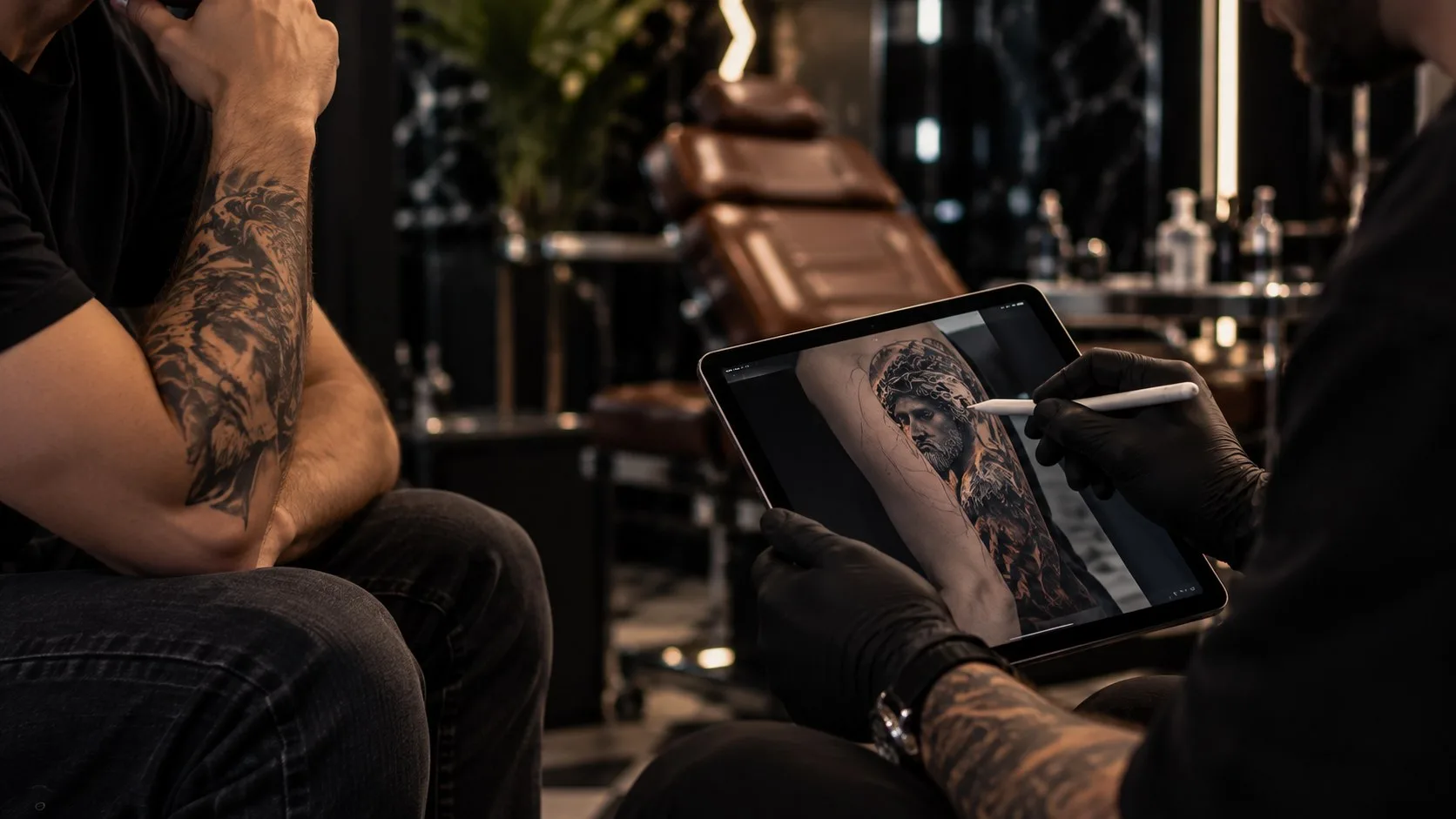
Tattoos stay with us for a long time, while tastes and circumstances change. Lines blur over time, colour fades, the subject loses its meaning, or the piece never turned out quite as you hoped. In many cases an old tattoo does not need to be removed: it can be covered — with a new one on top that hides the old one inside it.
When to consider a cover-up
People most often come for a cover-up when:
- the old tattoo has blurred, the lines have lost their sharpness and the colour has faded;
- the subject has lost its meaning or is a reminder of something they would rather leave behind;
- the piece was weak from the start;
- they want something truly striking in its place.
What a cover-up is
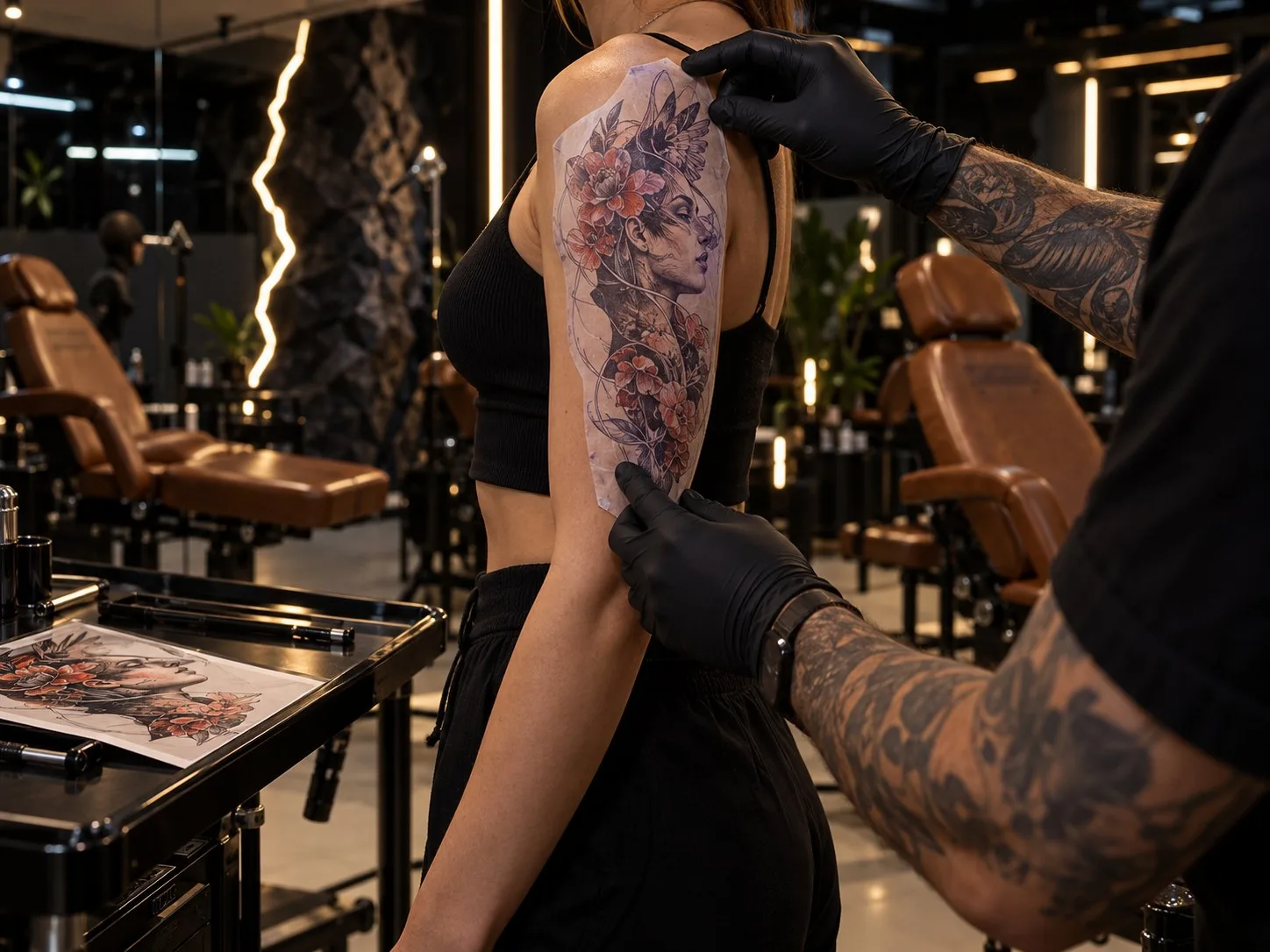
A cover-up is not painting over an old tattoo but a new piece built around it. The artist studies the old lines and dark areas and creates a design so that they disappear into the shadows, textures and details of the new subject. The eye sees the new composition, and the old one stops reading.
That is why a cover-up design is always created individually, for a specific old tattoo. A ready-made design from the internet almost never works for this.
What the result depends on
- How dark the old piece is. The denser and darker the ink, the harder it is to hide. Faded and light tattoos are easier to cover.
- Size. The new piece is almost always bigger than the old one: it needs space to hide the previous outlines.
- Colour. A light colour cannot cover a dark one — ink in the skin does not sit in layers like paint on paper. So a cover-up is built on dense dark areas, and light accents go where there is clear skin underneath.
Which subjects cover best
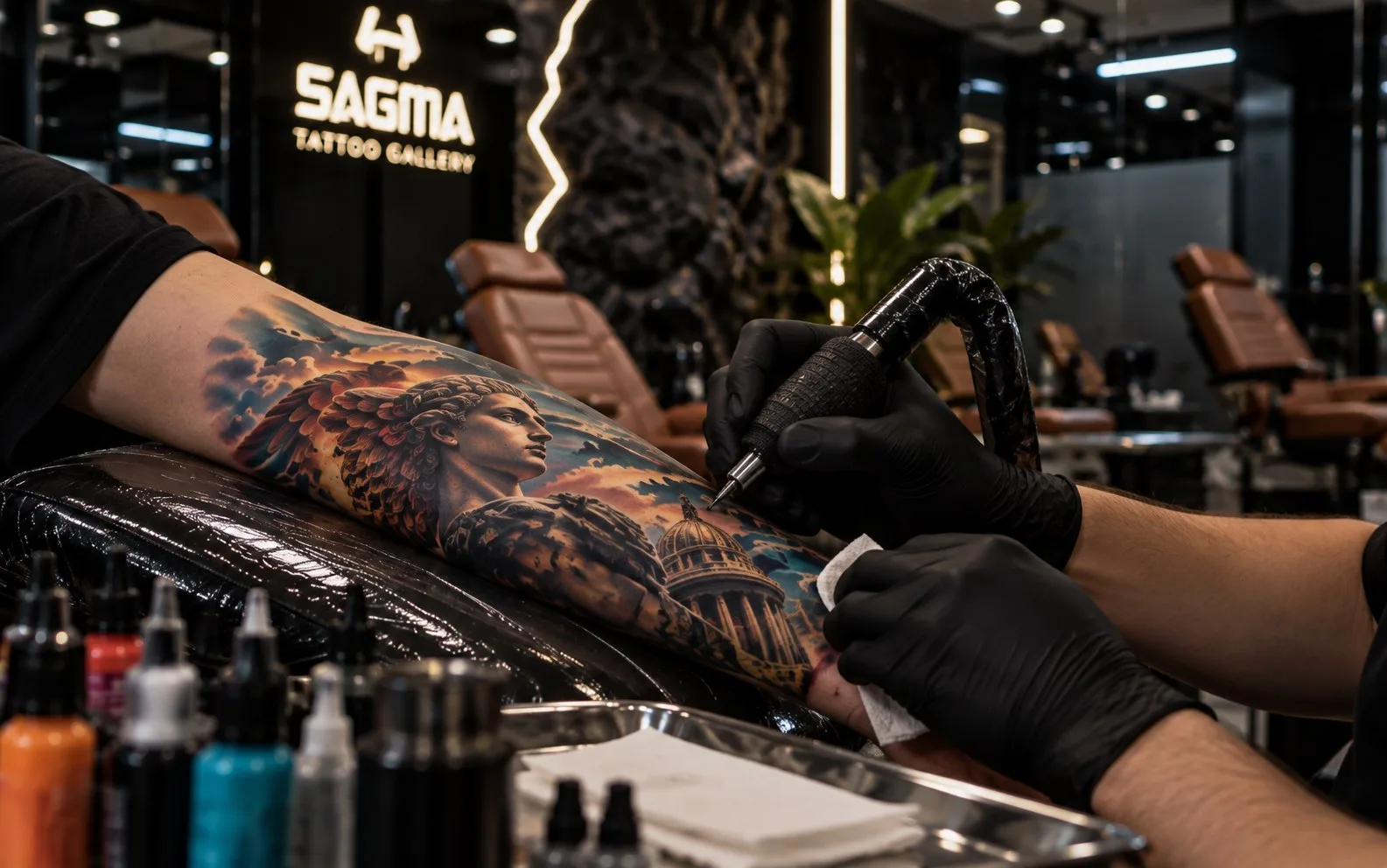
Compositions with deep shadows, volume and texture work best: realistic portraits, animals, nature, fantasy scenes. Realism is full of transitions from light to dark, and old lines are easy to hide within them. That is why cover-ups suit artists who work in colour and black and grey realism. Vladislav Liutsko, for example, also uses shades of grey for covering old tattoos.
Fine minimalist work, lettering and large light areas are harder: the old tattoo can show through them.
Colour and black and grey cover-ups
A black and grey cover-up works with deep black and smooth greys: the old lines disappear into shadows and dense areas, and the light is built on clear skin. A colour cover-up uses rich dark tones in which the old piece gets lost, with bright accents where there is nothing underneath.
Your artist will tell you which approach suits you best once they see the old tattoo: sometimes colour hides it better, sometimes the opposite.
When laser comes first
If the old tattoo is very dark or large, it can first be lightened with laser — in one or several sessions. The aim is to make it lighter and give the new design more freedom; there is no need to remove it completely. Your artist will tell you at the consultation whether lightening is needed, and if laser cannot be avoided, we will point you to where to go.
Cover-up or laser removal
Removing a tattoo completely with laser takes many sessions and months, and the skin has to recover in between. A cover-up gives you a new piece straight away — in as many sessions as the tattoo itself needs.
If you want clear skin with no tattoo, laser is the way. If you want a strong piece in place of the old one, go for a cover-up.
What to expect from a cover-up
The new piece will be bigger than the old one and most likely darker where the previous lines are hidden. Sometimes it is shifted or rotated slightly so that the old outlines fall into the right parts of the new design. This is a normal part of the work: you approve the design before your artist starts the session, so you know what the result will be.
How to photograph your old tattoo for a quote
To help your artist understand the task in advance, send a photo:
- in daylight, without flash or filters;
- taken straight on — that way the true proportions are visible;
- of the whole tattoo and in close-up, so the lines and dark areas can be seen;
- if possible, with a ruler next to it, so the size is clear.
How a cover-up works at Sagma Tattoo Gallery
- A photo of the old tattoo. Send us a photo following the tips above — your artist will understand the task in advance.
- A free consultation. Your artist looks at the old piece in person, discusses the subject, size and placement with you and tells you whether it can be covered without laser.
- A design for your tattoo. It is created specifically for the old piece and refined until it is exactly what you want.
- The sessions. How many depends on the size and complexity. A large cover-up is done over several sessions, with breaks for healing.
How much does a cover-up cost?
A cover-up is priced individually: first your artist looks at the old tattoo, and only then gives you a price. It depends on the size, the complexity of the work and whether laser is needed. You can read more about the service on the Cover-up page and find guide prices for tattoos on our Prices page.
Healing after a cover-up
A cover-up heals just like any other tattoo and needs the same aftercare. How the skin changes day by day and what to avoid in the meantime — read our article “Tattoo Healing Day by Day”.
Frequently asked questions
Can any tattoo be covered?
Almost any, but not always straight away. Very dark and large pieces are sometimes lightened with laser first. Your artist will give you a definite answer once they see the tattoo in person.
Will the old tattoo show?
The design's job is to hide the old lines within the new composition so that the eye reads only the new piece. How well that works without laser is something your artist will assess at the consultation.
Can a recent tattoo be covered?
Yes, but only once it has fully healed. Your artist will tell you exactly when after seeing your skin.
How many sessions does a cover-up take?
It depends on the size and complexity, and your artist will tell you the number of sessions at the consultation. A large piece is done over several sessions, with breaks for healing.